


In defence of movie dates
By Katherine
A movie is a terrible first date. Agree or disagree?
Back when I was dating, I got a lot of criticism from friends and family for suggesting we go see a movie. Apparently, it defeats the purpose of a date because you don’t talk and therefore you don’t get to know each other. Essentially, you’re just sitting in the dark, staring at a screen for two hours.
Today, I’m going to prove that everyone who disagreed with me was wrong.
Because even though you’re not speaking, you are sharing something. And to explain why, we need to look back at the history of storytelling to understand why stories matter – and what happens in our brains when we experience them (yes, science!).
When you trace back the history of storytelling, it becomes quickly apparent that it’s as old as time and has an important place in every culture and society.
One of the earliest forms of storytelling we know of comes from cave paintings in France, dating back around 30 000 years. What’s interesting is that they appear to show scenes or sequences of events – things like hunting and rituals – and many archaeologists believe they were likely accompanied by oral storytelling. So not just doodles, as one might think. Even way back then, humans were building narratives to make sense of the world around them.

via UNESCO
Fast forward to ancient Mesopotamia, and we find one of the earliest surviving works of literature: The Epic of Gilgamesh. Written on clay tablets, it tells the story of two men who become friends, go on adventures and learn life lessons. In other words… the original bromance. What’s especially cool is that we’re still reading it thousands of years later, proving that themes like friendship, grief and purpose are universal to being human.

via British Museum
Then we move forward again to the man who needs no introduction: William Shakespeare. Almost 400 years after his death, his plays are still performed around the world. Romeo and Juliet. Hamlet. Macbeth. Ever heard of them? These stories about love, ambition and tragedy still resonate because they reflect human experiences we continue to recognise today.
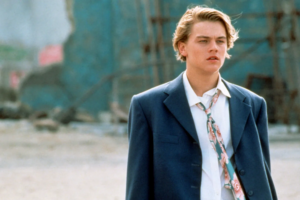
via 20th Century Fox Film Corp
And storytelling hasn’t gone away – it’s just changed.
We see it in films, books, podcasts, and even social media platforms like Instagram and Facebook. Take Humans of New York, for example. At first glance, it looks like simple street photography: a father and his son enjoying lunch on the sidewalk, or a woman sitting beneath a tree, looking at her phone. But what makes it powerful isn’t the image itself – it’s the story behind it. A father trying to raise his son without the pressures he experienced growing up (while still appreciating everything his own father did for him). A woman coming to terms with a painful breakup and feeling immense gratitude for the people who helped her through it.
Suddenly, that moment isn’t ordinary anymore. It becomes something you can relate to.
Which just goes to show that even in a visual-first culture, storytelling remains one of the most powerful ways we find meaning in the modern world.
So that little trip through history shows us something important: we are, fundamentally, narrative-driven beings. We naturally look for stories in everything (some of us more consciously than others) – because stories help us make sense of the world around us and connect with other people.
Which is lovely – but there’s more to the power of stories than that.
Stories have also been shown to help us communicate complex ideas more simply, and to improve learning and memory. And that’s where the science comes in.
When we take in facts and figures, the brain mainly activates areas involved in language comprehension. But when we hear a story, far more of the brain comes alive, lighting up like the night sky on the Fourth of July. Regions associated with emotion, sensory experience and memory all “switch on”. In other words, we don’t just understand a story – we experience it.
Which is why messages delivered as stories are so much more memorable than lists of facts.
There’s another fascinating layer to this called neural coupling. This is what happens between people during storytelling. As someone tells a story, the listener’s brain activity begins to synchronise with the storyteller’s – as though both people are sharing the same experience at the same time.
Storytelling doesn’t just happen in one brain. It helps our brains get on the same wavelength.
So… what does all of this have to do with movie dates?
Everything.
It’s why it actually makes perfect sense that people go on dates to the movies. Yes, it’s an activity that doesn’t involve interacting in the traditional way. But it does create a shared experience. This is also the conclusion HubSpot came to in a post I stumbled across while going down this storytelling rabbit hole.
Because your brain is wired to remember stories on a deeper level than many other experiences, the film – whether it was good or bad – becomes something meaningful that the two of you experienced together. The two of you laughed at the same jokes, jumped at the same scares and rode the same emotional rollercoaster together.
And because stories have the remarkable ability to synchronise our brains, that shared experience may bring you closer than, say, sitting across from each other making small talk over dinner (no shade).
So maybe a movie isn’t such a terrible first date after all.